
The 6 Habits That Make a School Safer
Security awareness is not a single gate, guard or gadget. It is the routine people follow every day.

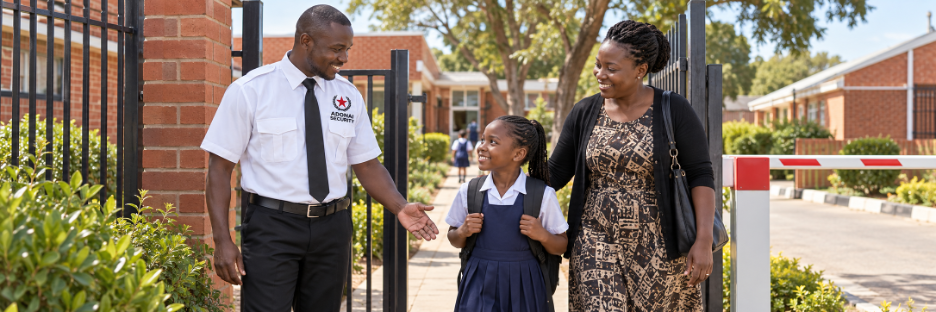
A school entrance works best when people, procedures and physical security support one another.
Picture a busy school morning. Parents are rushing to work, children are stepping out of cars and a delivery vehicle is waiting at the gate. Everyone has somewhere to be. In that rush, it is easy to assume that somebody else is checking who enters, where children are walking and whether they have reached the right place.
That is why school security should be treated as a shared daily habit. A safer school day depends on staff, parents, learners, visitors and service providers knowing what to do - and doing it consistently, even when the queue is long or the person at the gate is familiar.
THE BIG IDEA Good school security should feel organised and welcoming: clear enough to follow, visible enough to deter risk and calm enough to protect learning.
1. Make the gate a real checkpoint
Familiar does not mean unverified.
Every visitor should follow the school's check-in process. Confirm the purpose of the visit, record arrival and departure, and direct visitors to reception. Issue a visitor badge where the school uses one, and arrange accompaniment when required. A delivery uniform or familiar face should still go through the same checks.
Parents support this system when they use the agreed entrance, keep their identification available when requested and avoid asking staff to make exceptions. Consistency makes it easier for a guard or receptionist to identify the unusual situation.
2. Turn the drop-off zone into a safety zone
The fastest route is not always the safest route.
Schools should clearly mark drop-off and collection points, separate pedestrian movement from vehicles where possible and use trained staff or security personnel to manage the busiest periods. Drivers should slow down, keep crossings and entrances clear, and follow the directions of authorised traffic supervisors.
PARENTS CAN HELP Use the school-side drop-off area, let children exit on the pavement side, keep the queue moving and never call a child across the road to a waiting vehicle.
WHY IT MATTERS The World Health Organization says road traffic injuries are the leading cause of death for children and young people aged 5-29 worldwide. Safe school-zone habits are part of prevention.
3. Treat collection like a handover
A child should leave with the right person, through the right process.
Keep parent and emergency contact details current, and know which adults are authorised to collect each child. Parents should communicate changes through the school's agreed channel. If an unexpected collector arrives, staff should verify the change with the parent or guardian using the contact details already held by the school.
If collection is delayed, keep the child in a designated supervised area while staff contact the family or emergency contacts. The same procedure should apply after sports, clubs, trips and other activities - not only at the end of a normal school day.

A safe school makes it easy for learners to speak to a trusted adult.
4. Make reporting easy to understand
If people do not know who to tell, small concerns can become bigger ones.
Learners should know, in language appropriate to their age, how to report bullying, threats, unwanted attention or other worrying behaviour. Make the staff member responsible for child protection easy to identify. Adults should listen calmly, take concerns seriously and follow the school's child protection procedures. Concerns about a familiar person deserve attention too; responsibility for protecting children remains with adults.
The conversation should include online experiences. A hurtful class-group message or pressure to share personal information can affect a learner's sense of safety. Encourage children to speak to a trusted adult and reassure them that asking for help is welcome. Respond without blaming the child.

UNESCO global snapshot: almost one in three students (32%) reported being bullied by peers at school in the previous month. The figure is based on data covering 144 countries and territories; it is not a Zimbabwe-specific rate.
5. Secure the spaces between the main routines
Security gaps often hide in ordinary details.
Walk around the premises and identify damaged fencing, faulty locks, poor lighting, overgrown areas and rooms that are difficult to supervise. Give each problem an owner and a repair deadline. Where cameras, alarms or electronic access controls are installed, check that they work, that recordings are protected and that staff know who responds to an alert.
A SIMPLE MONTHLY CHECK Look at the perimeter. Lock unused rooms. Light dark areas. Log faults. Review whether the fix was completed.
6. Practise the response before it is needed
An emergency plan only works when people understand their part.
Staff need clear roles for raising an alarm, contacting emergency services, accounting for learners and communicating with parents. Plan for younger children and learners who need assistance. Keep escape routes usable, practise calmly and review what happened afterwards.
Use a simple loop when something is reported:

A practical safety loop: notice the gap, report it, respond calmly and review the routine.
A 10-MINUTE SCHOOL SECURITY WALK Start at the gate and walk the school day in sequence: arrival, lessons, break time, visitors, collection and after-school activities. Ask: Who is responsible here? What could go wrong? How would we know? What is the next action?
Every learner should be able to arrive with confidence, focus on learning and return home safely. Small, consistent habits help schools work towards that goal.
Speak to Adonai Security about physical guarding, access control, CCTV, alarm and other technical security solutions suited to your school's needs.
Save this checklist
Use it as a quick staff discussion before the next busy school day.
GATE - Are visitors directed to reception, recorded and visibly identified?
TRAFFIC - Are pedestrian and vehicle movements separated as far as possible?
COLLECTION - Are parent contacts, emergency contacts and authorised collectors current?
REPORTING - Do learners know exactly which trusted adult they can approach?
EQUIPMENT - Have locks, lights, cameras, alarms and access controls been checked?
RESPONSE - Do staff know who raises the alarm, accounts for learners and communicates with families?